The Chladni Tower
Year: 2023
Collaborated with: Zhiyu Li
By sprinkling sand onto a rigid plate fixed at its center and bowing the edge of the plate with a violin bow, the sand rapidly gathers along specific lines. In the 18th century, physicist Ernst Chladni first used this method to reveal vibration patterns on rigid surfaces. These patterns later became known as Chladni figures.
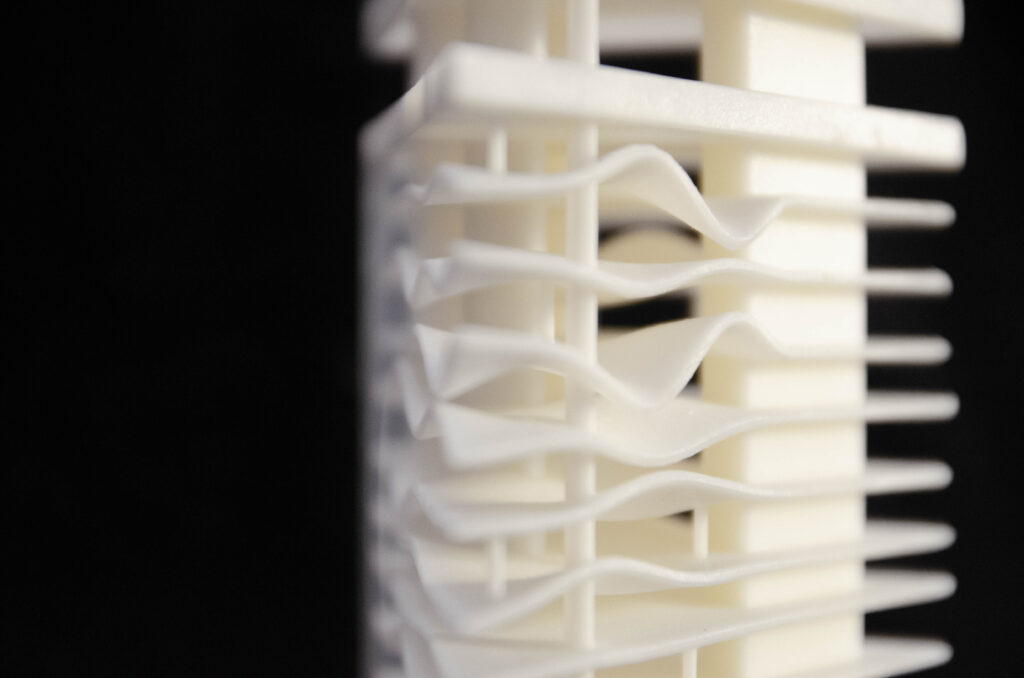
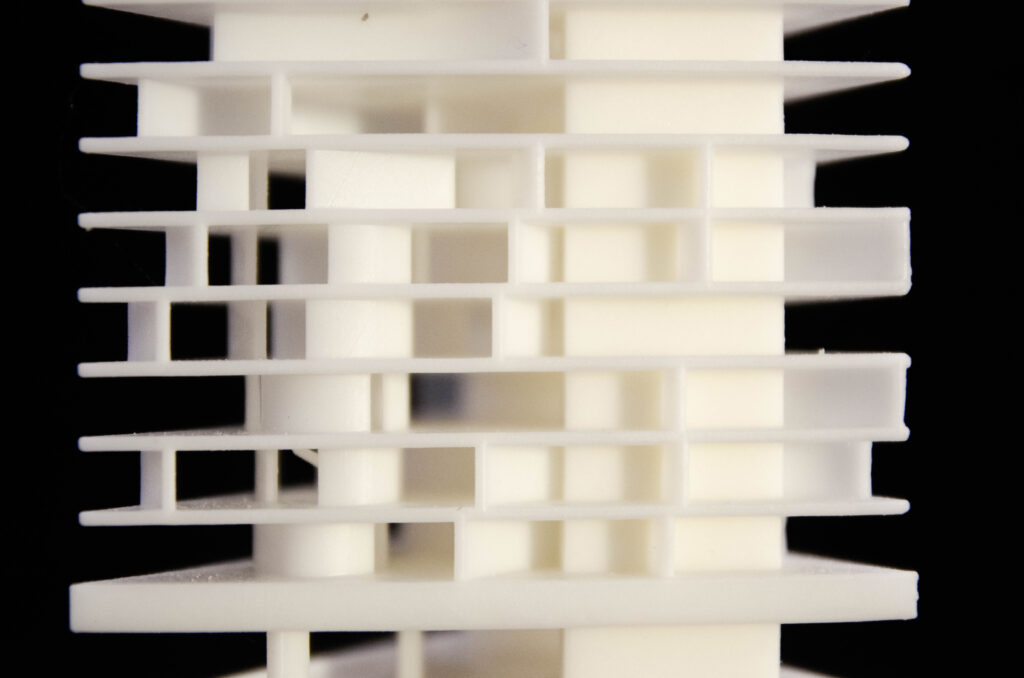
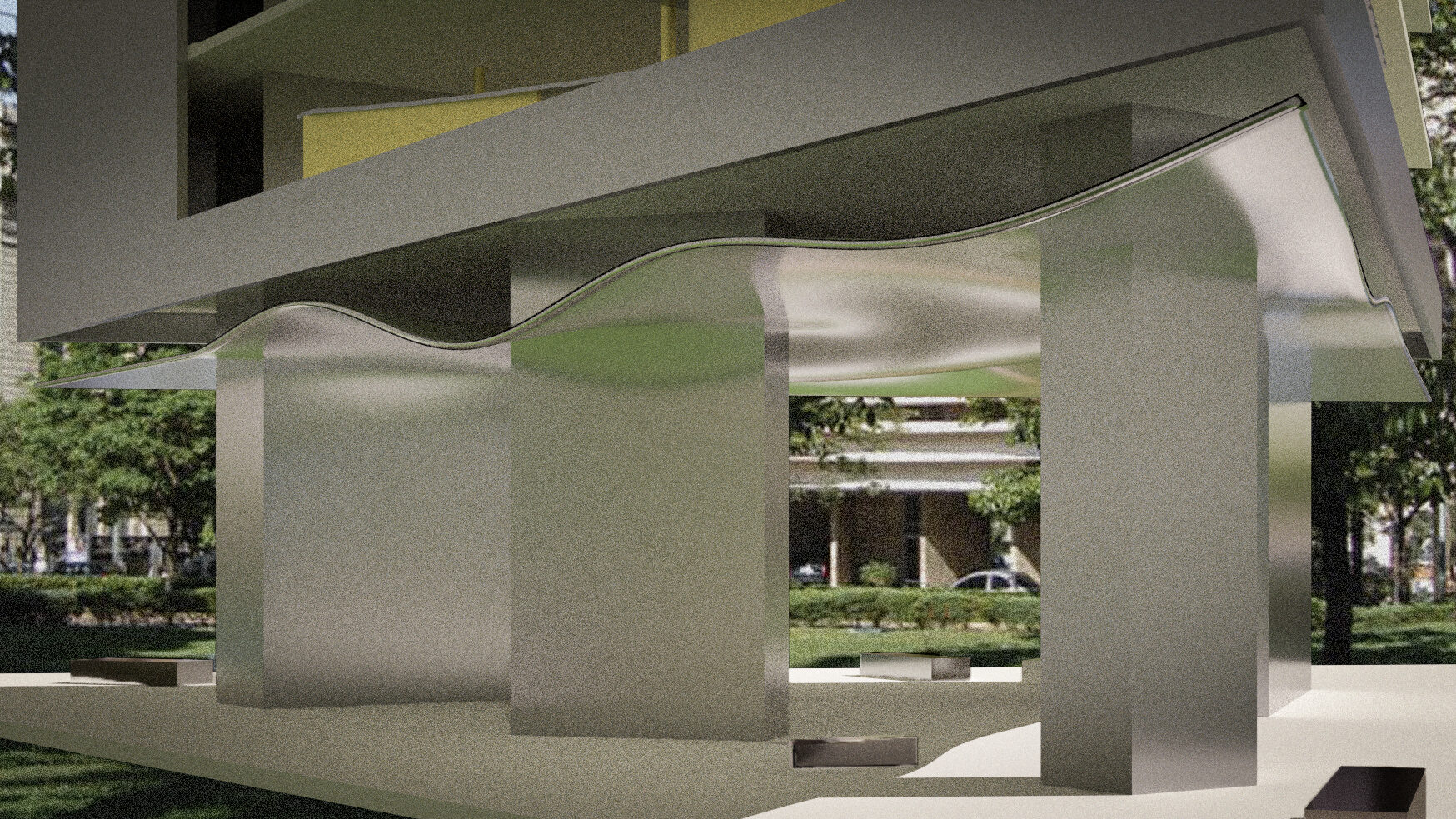
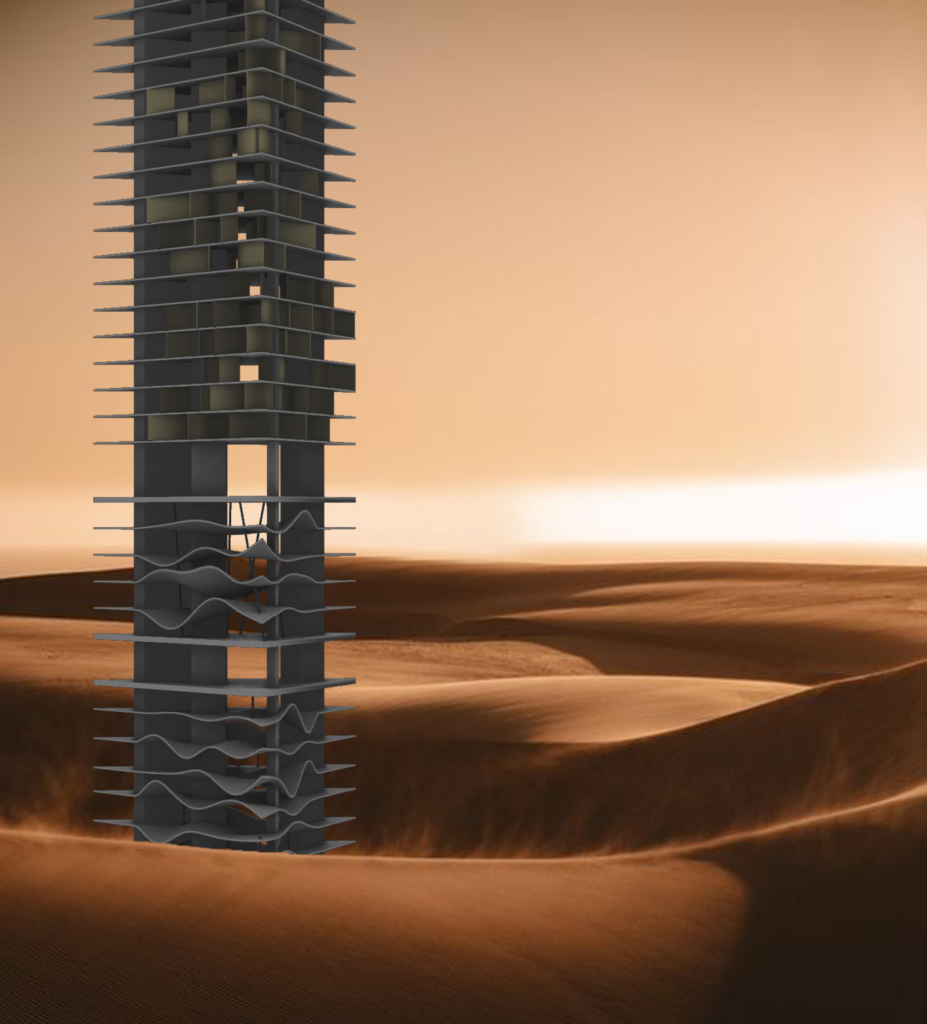
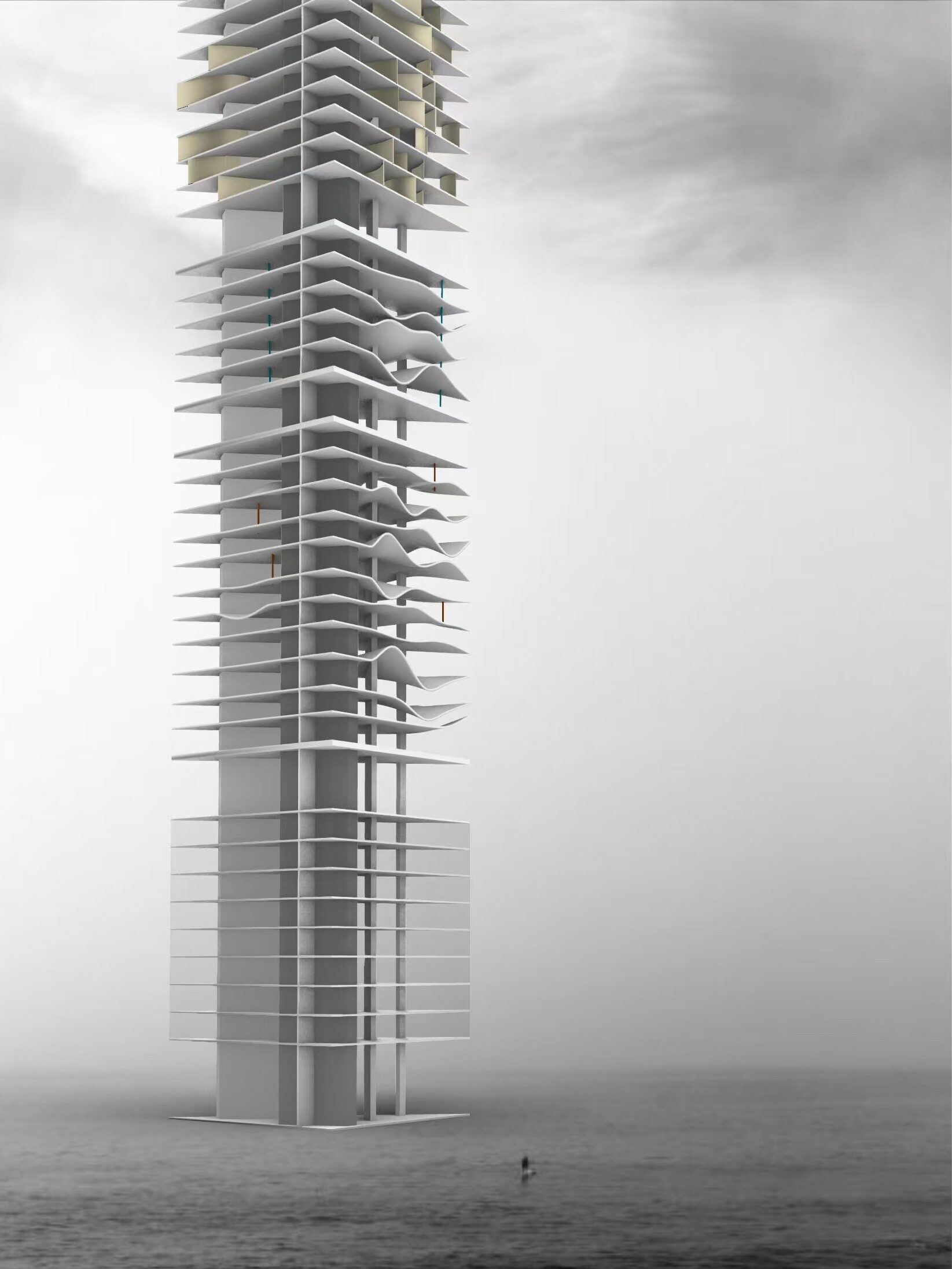
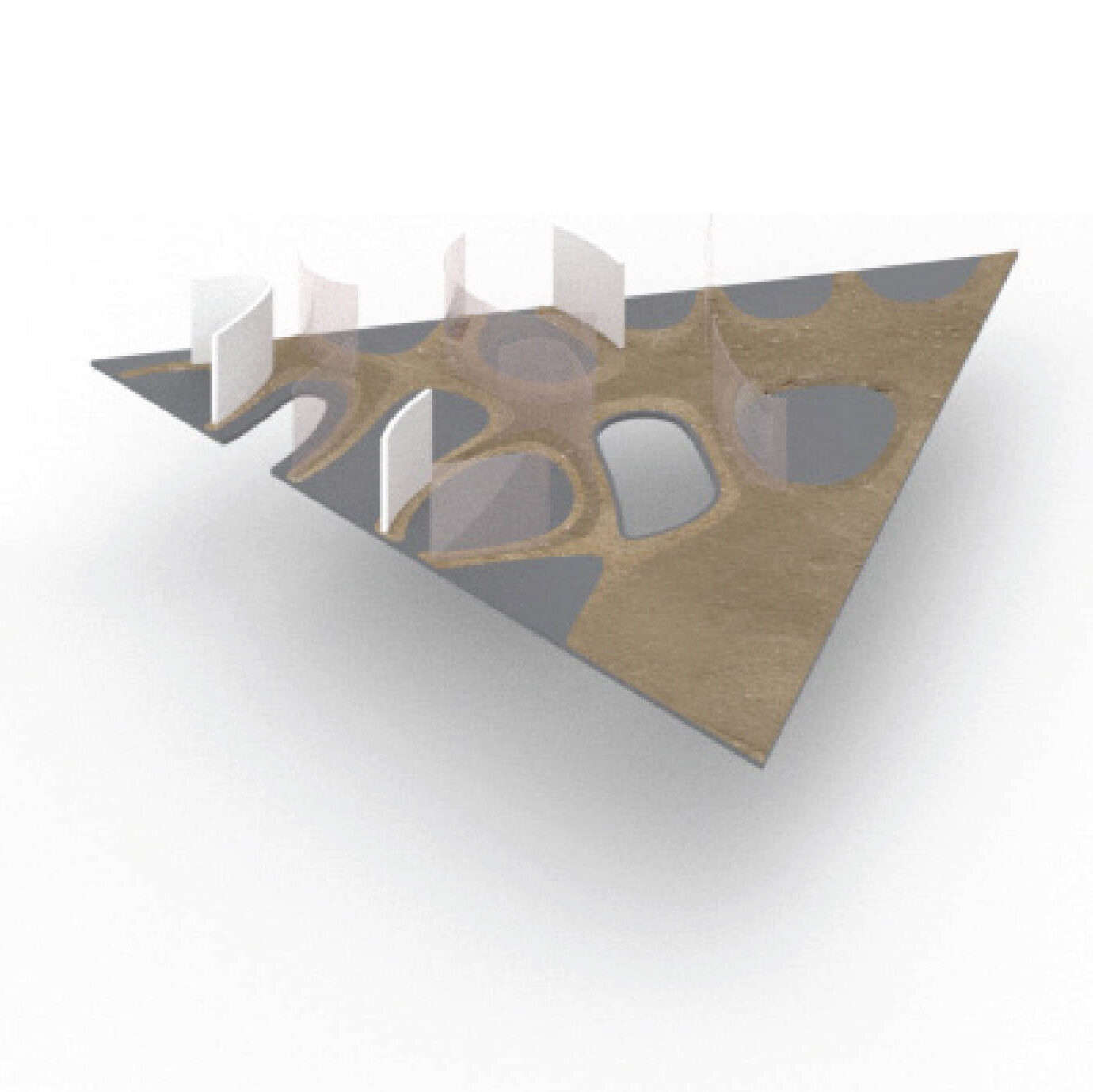
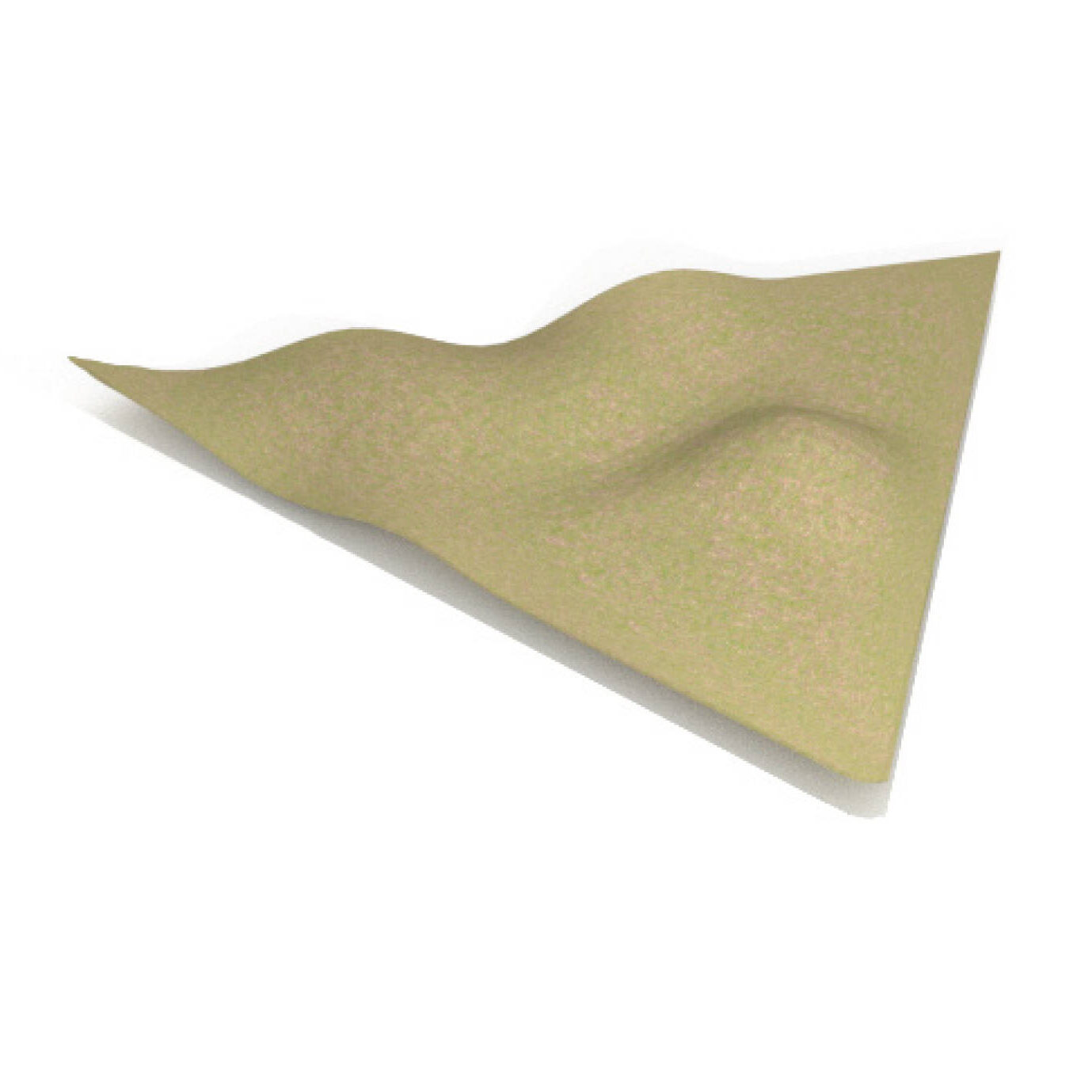
Inspired by this phenomenon, this project proposes a novel construction method that utilizes vibration to form floor slabs with topographical variation. Each slab is envisioned to be vibrated, solidified, and then transported to its designated level during construction. Elevator and stair cores act as fixed constraint points within the system. By controlling the distribution of these constraint points, diverse spatial conditions can be generated across the floor plate.
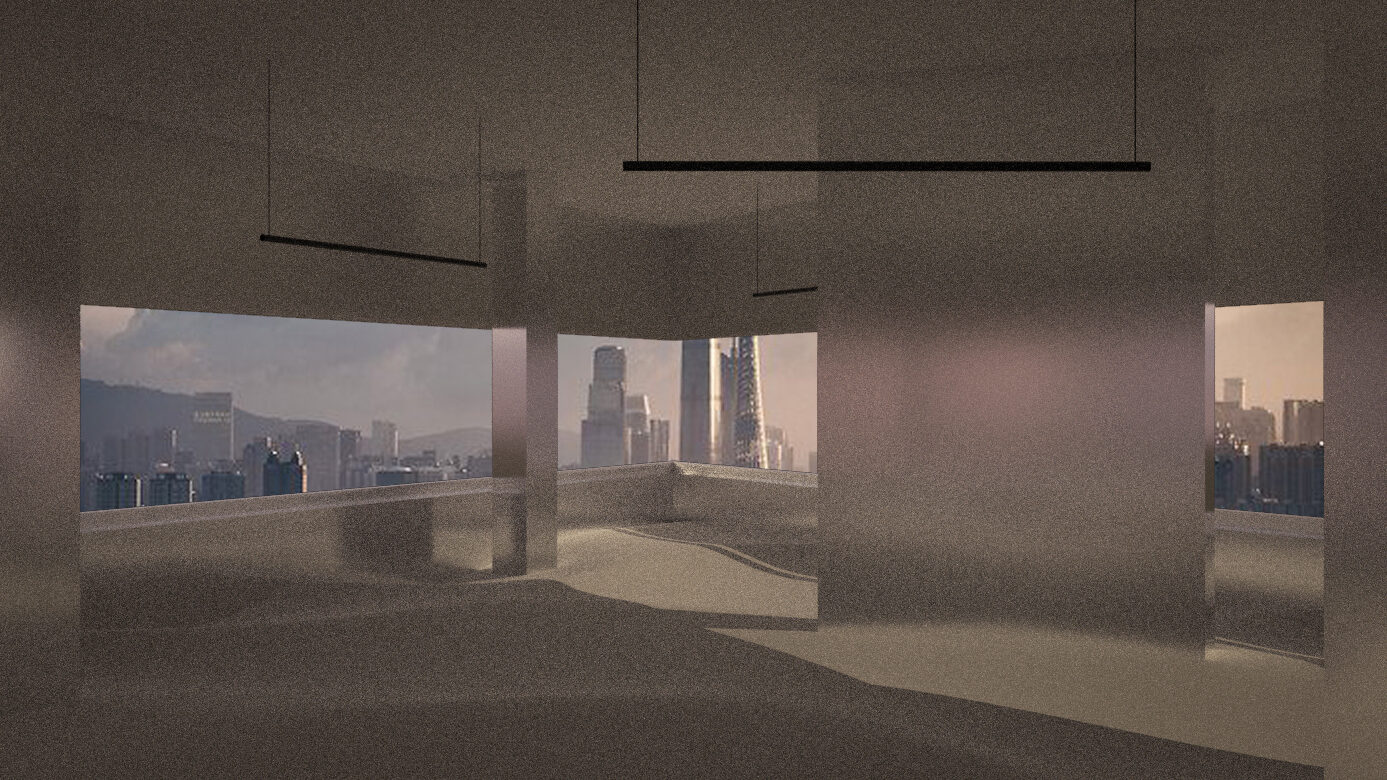
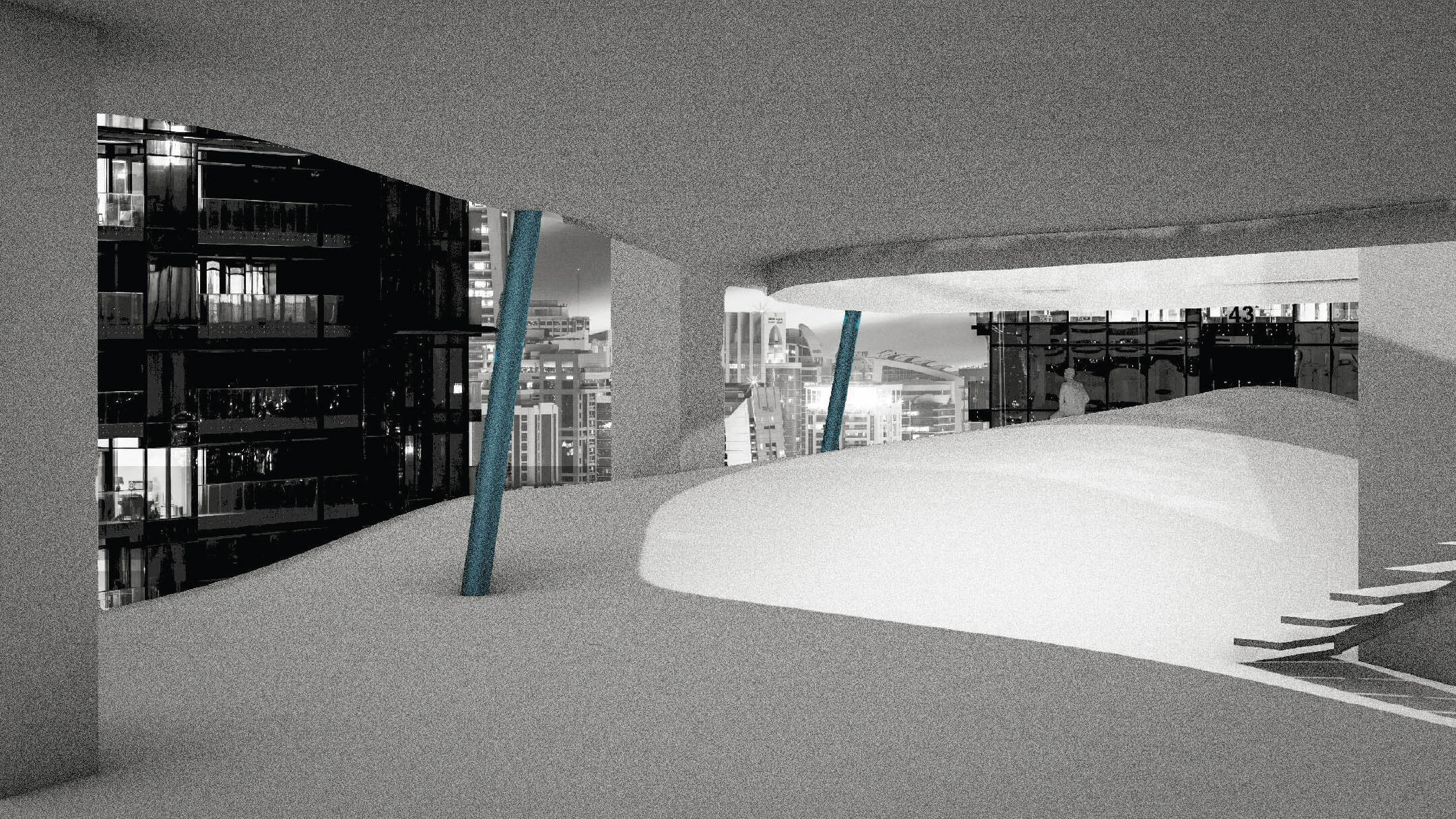
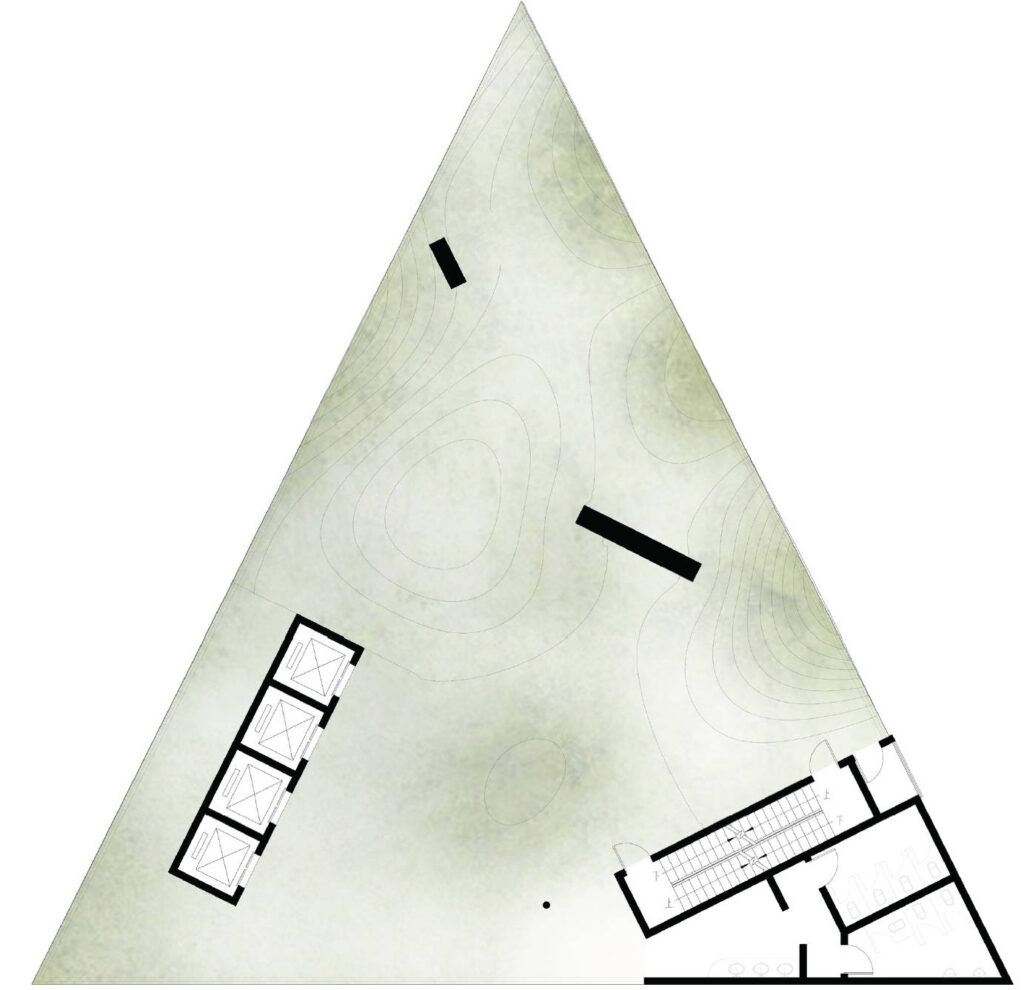
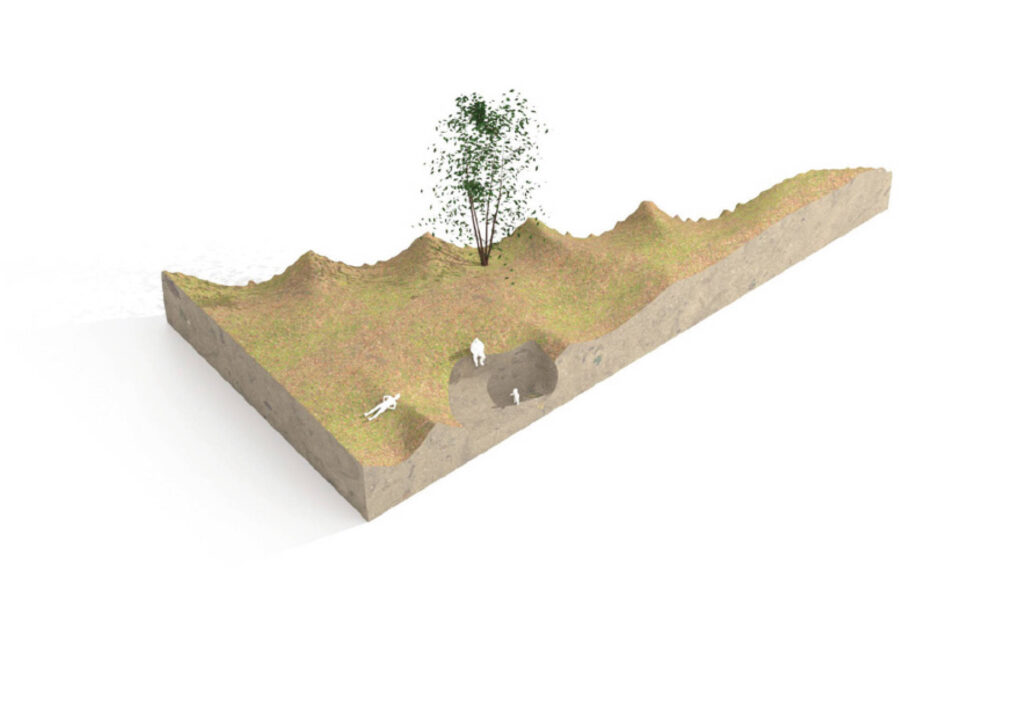
The vibrationally formed topography not only serves to subdivide office spaces, but also enables the integration of vegetation, transforming each level into a natural park within a high-density office building.
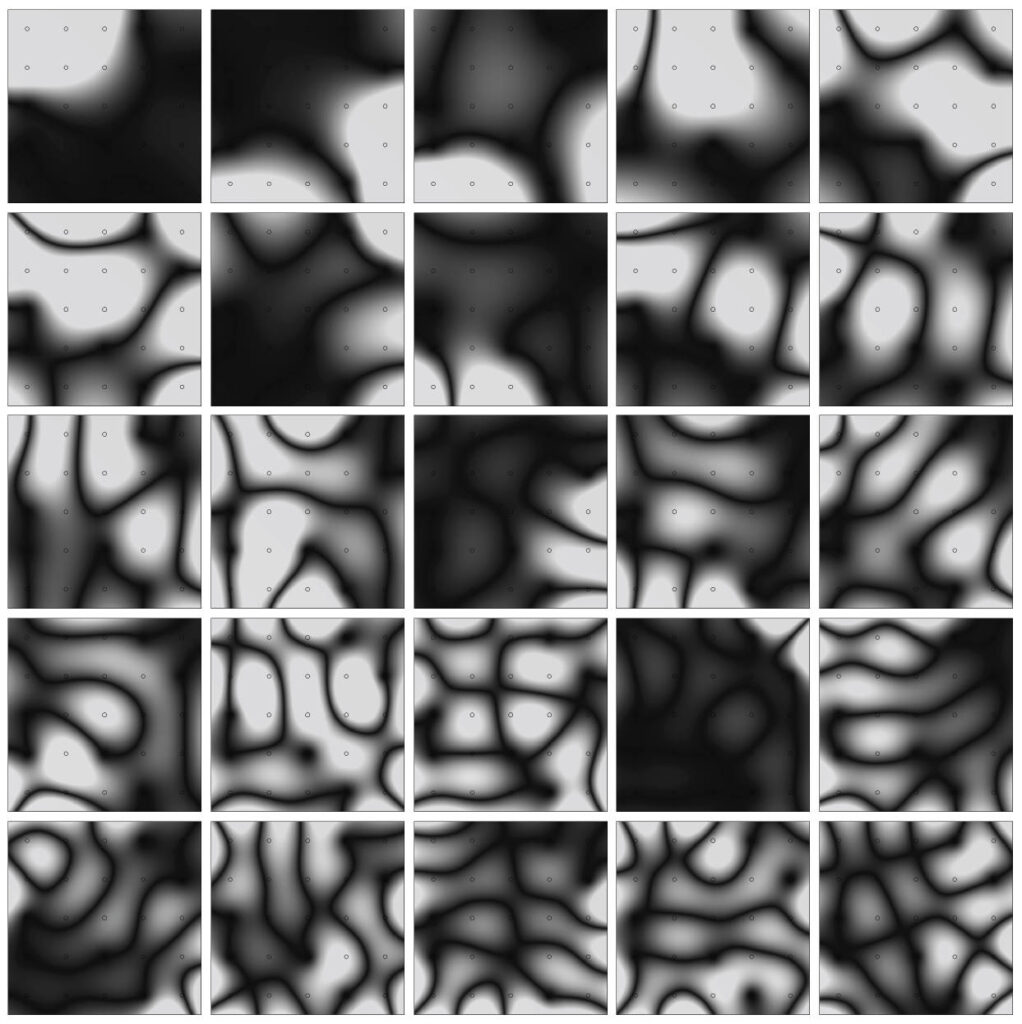
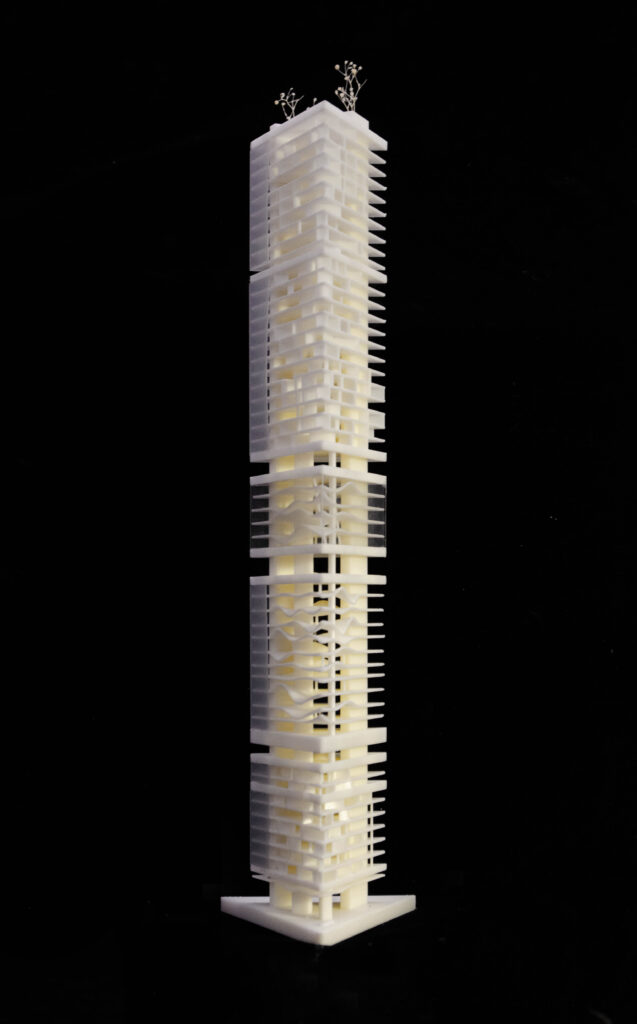
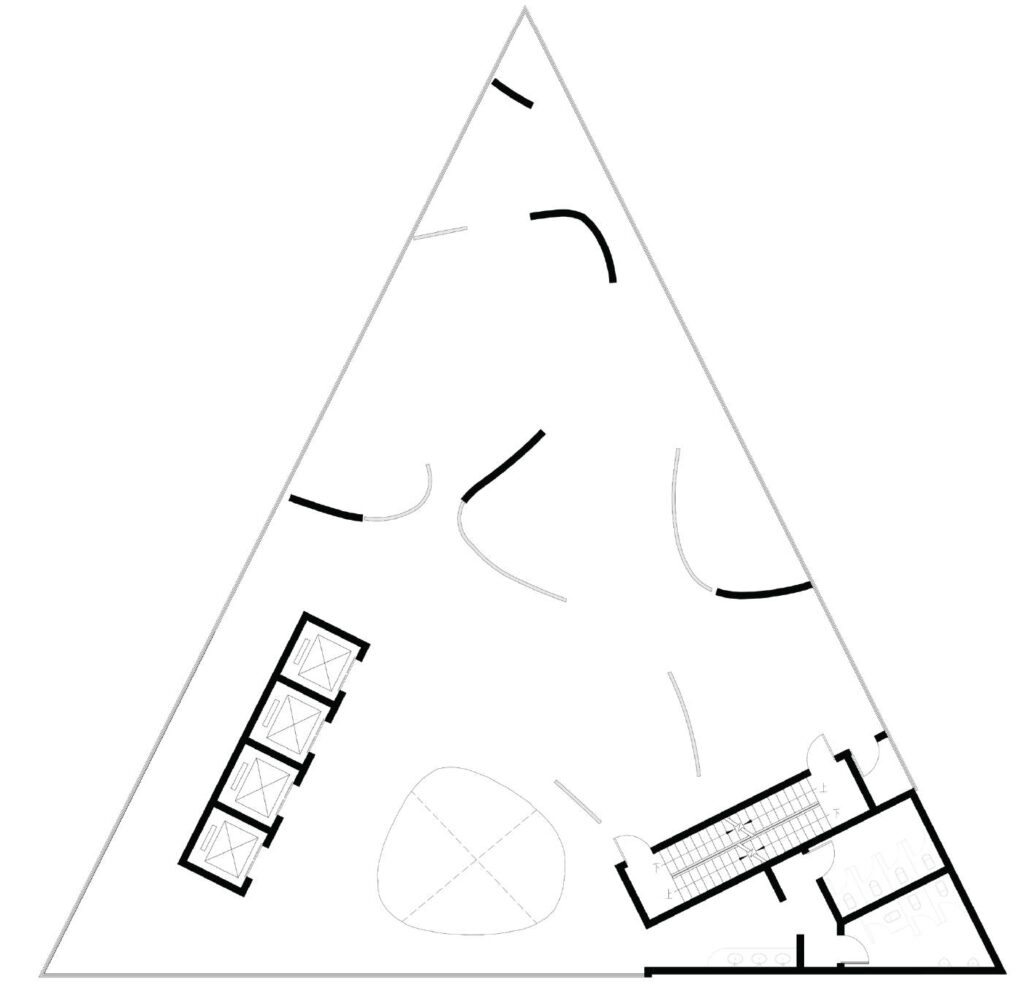

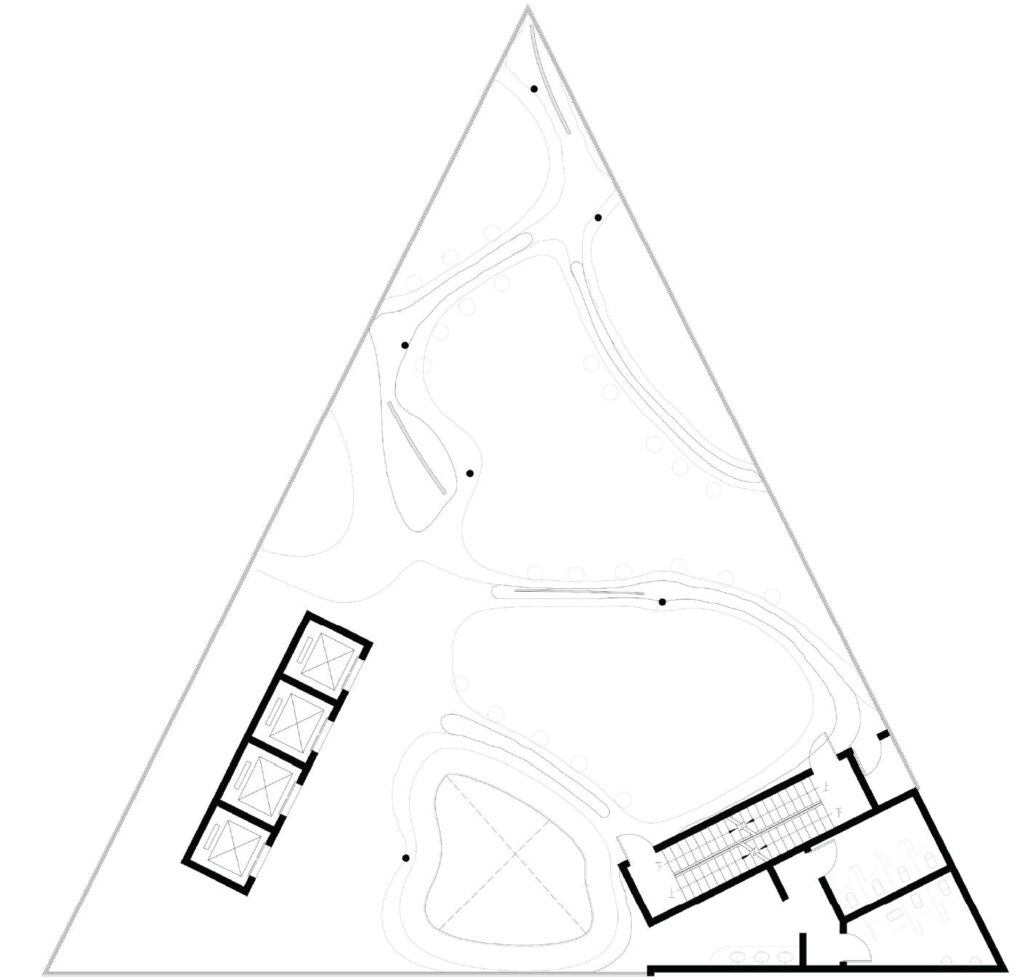

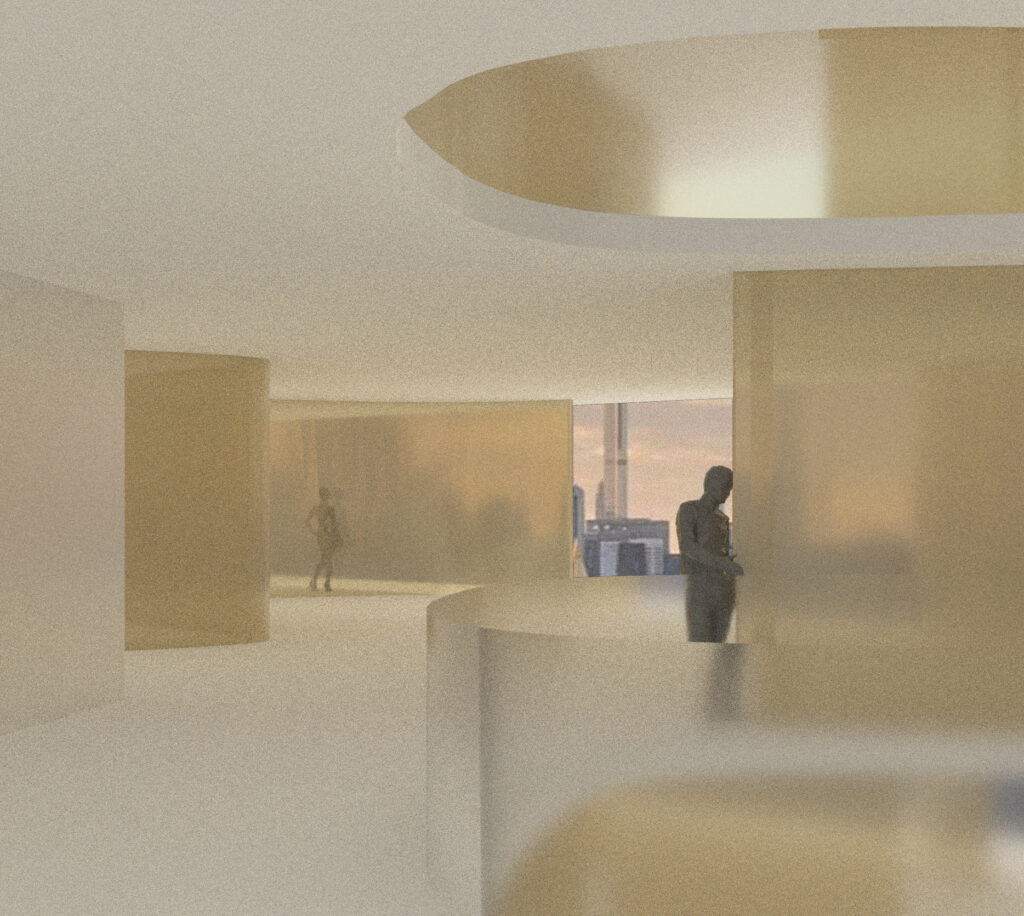
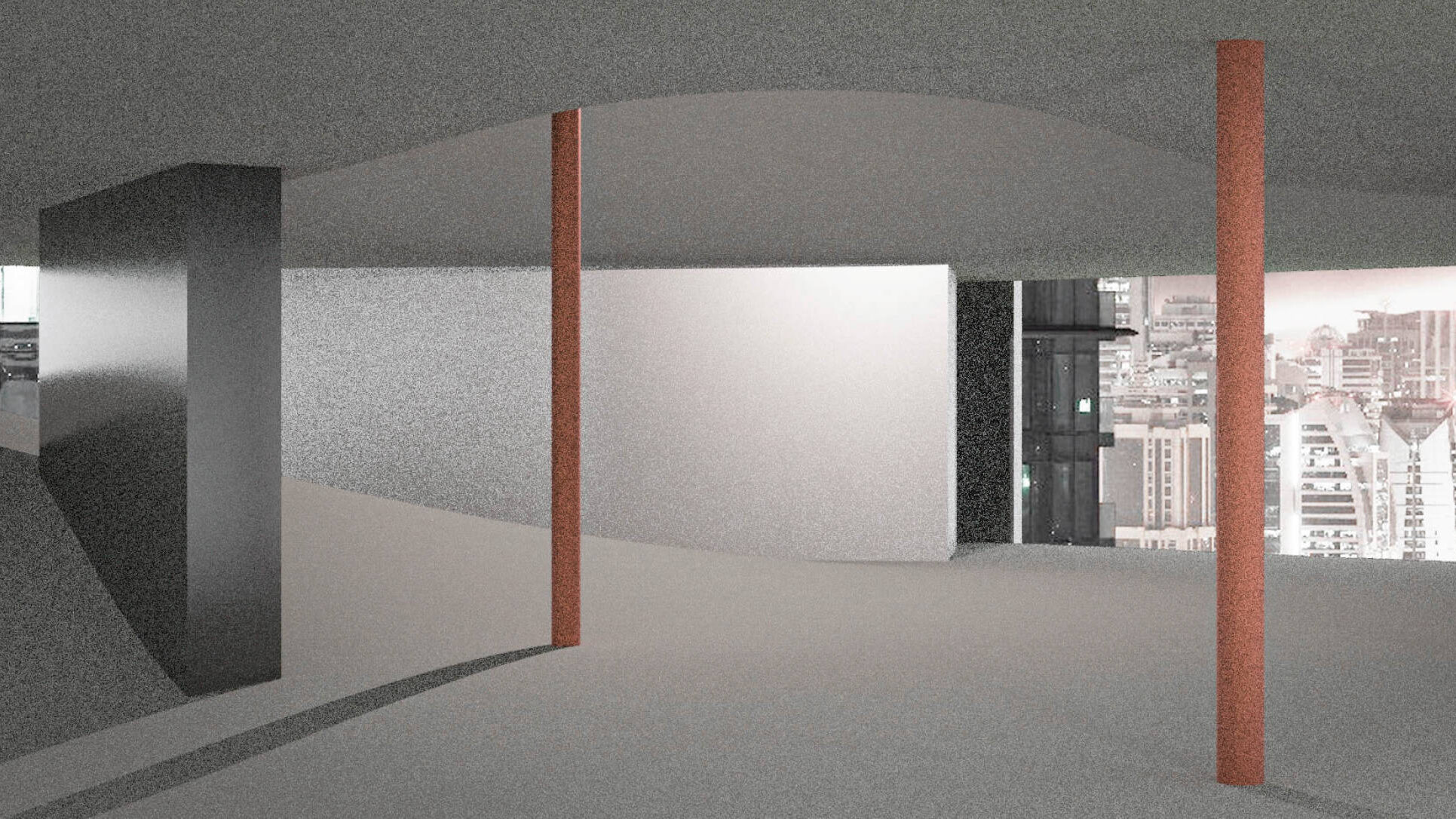
Flexible soft partition systems, capable of being freely moved or retracted, are installed along tracks shaped by vibration patterns. This allows the floor plan to be reconfigured according to different programmatic needs. Some of the vibration pattern lines extend from the floor to the ceiling, becoming load-bearing structural elements.
Within the thicker dune-like formations, larger-scale vegetation can be planted, and cave-like interior spaces emerge, enriching the overall spatial experience.
The height variation of the undulating floor corresponds to the vibration phases. By adopting the three-dimensional vibration pattern as the floor plate and covering it with vegetation, the space takes on the quality of a natural terrain.
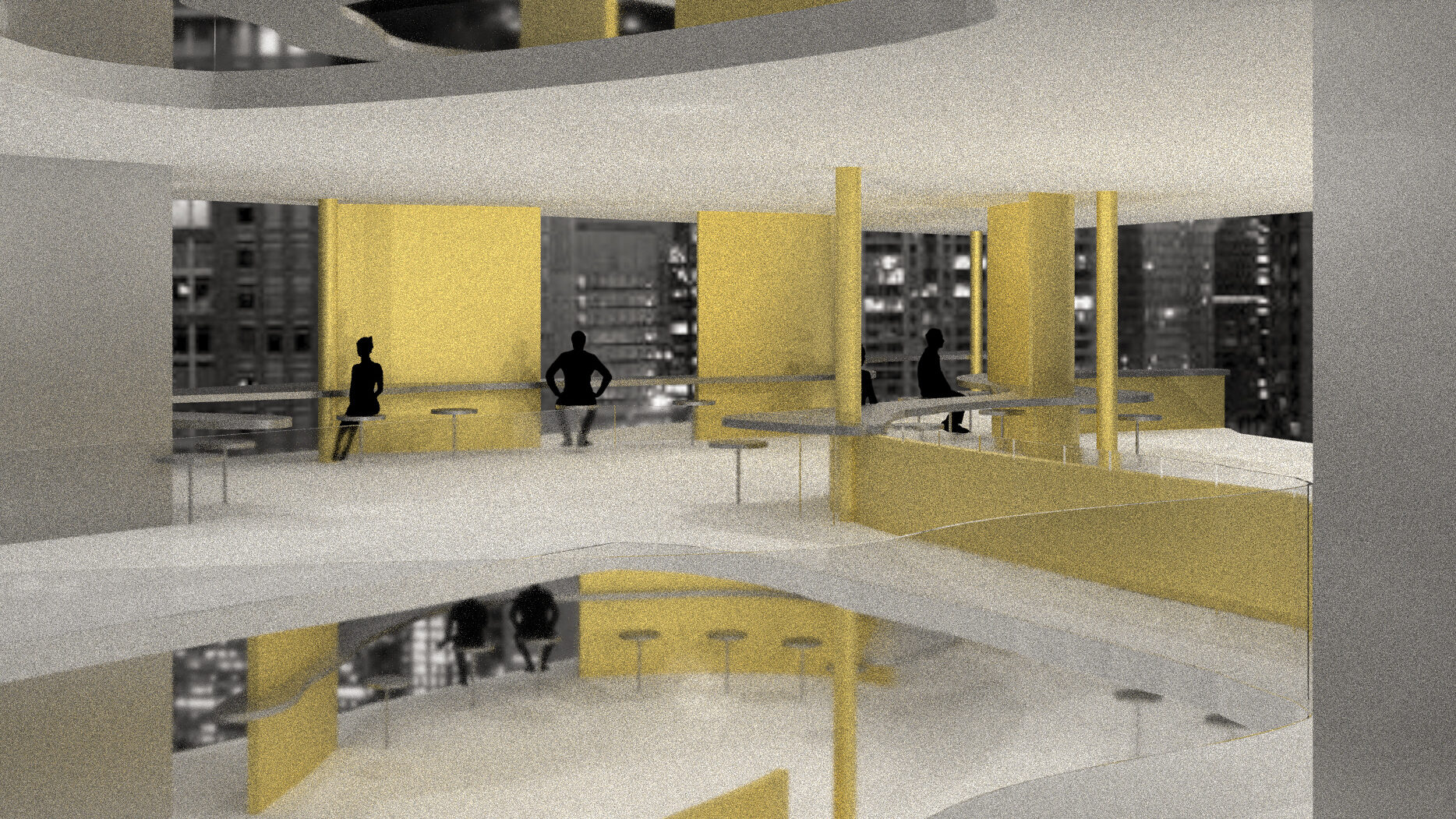
The vibration pattern can be lifted from the ground plane and transformed into furniture at a human scale, such as tabletops, seating, and storage units.
Openings in the floor plate that follow the vibration pattern enhance spatial connections between different levels of the building.