The Cave Chair
Year: 2025
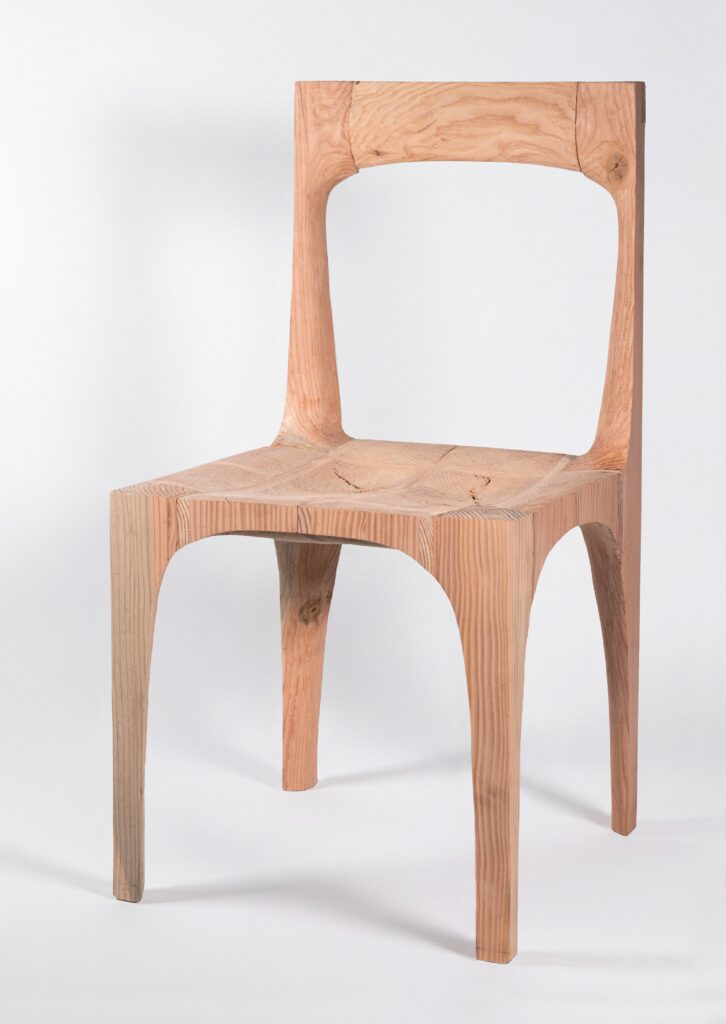
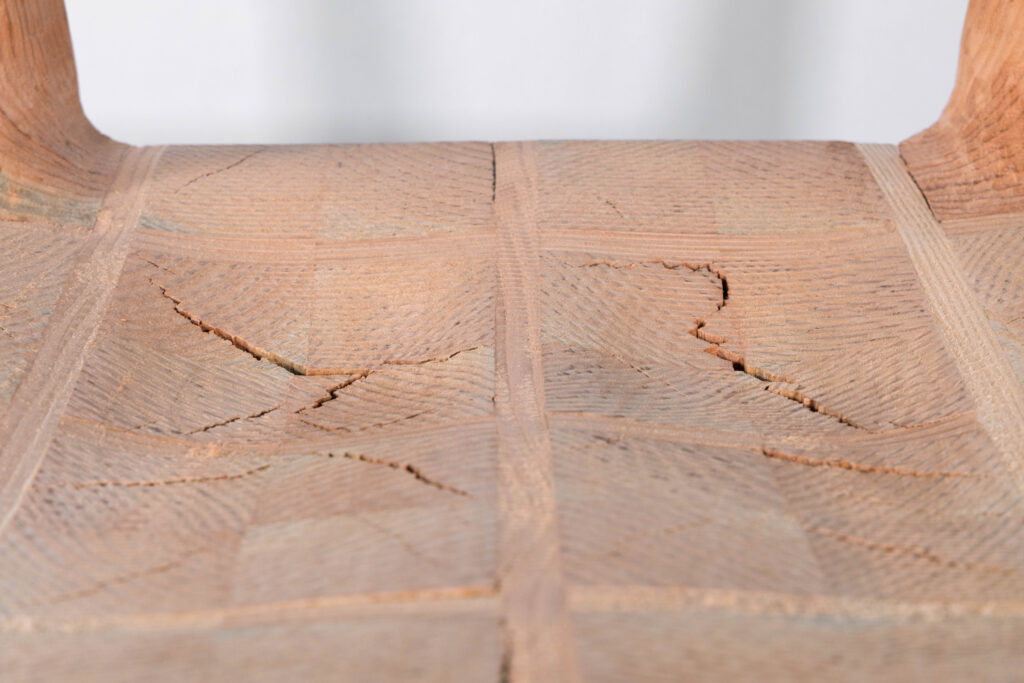
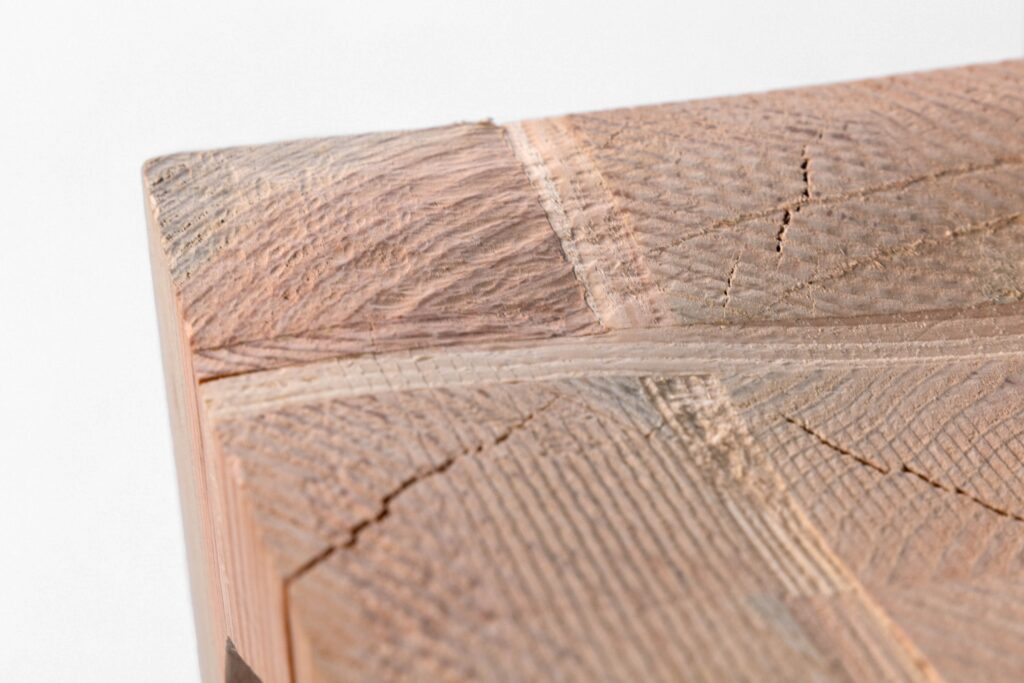
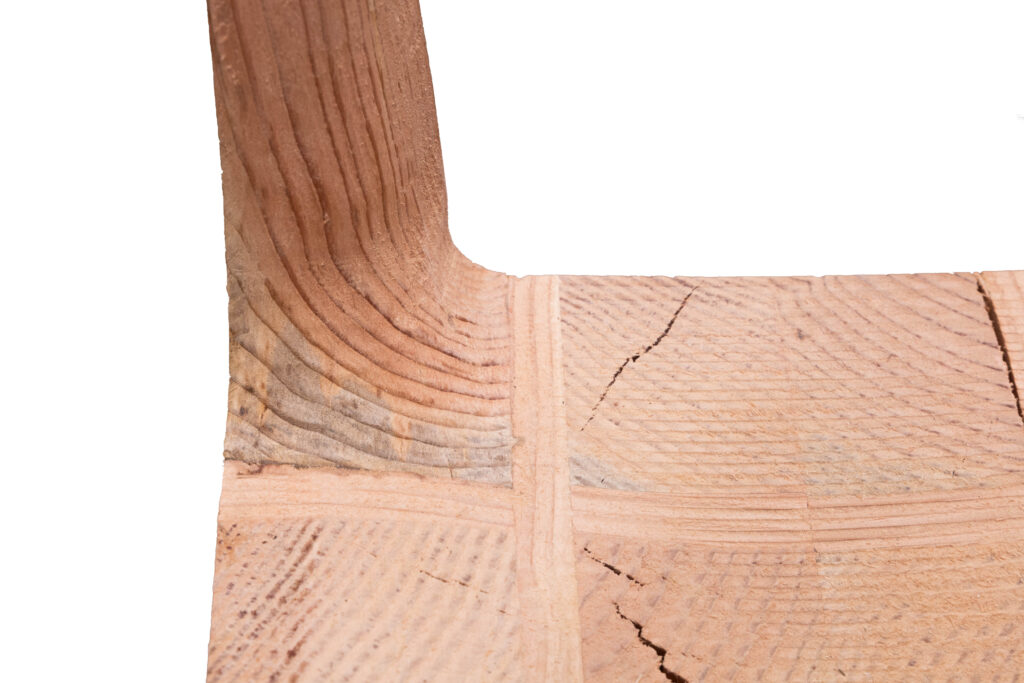
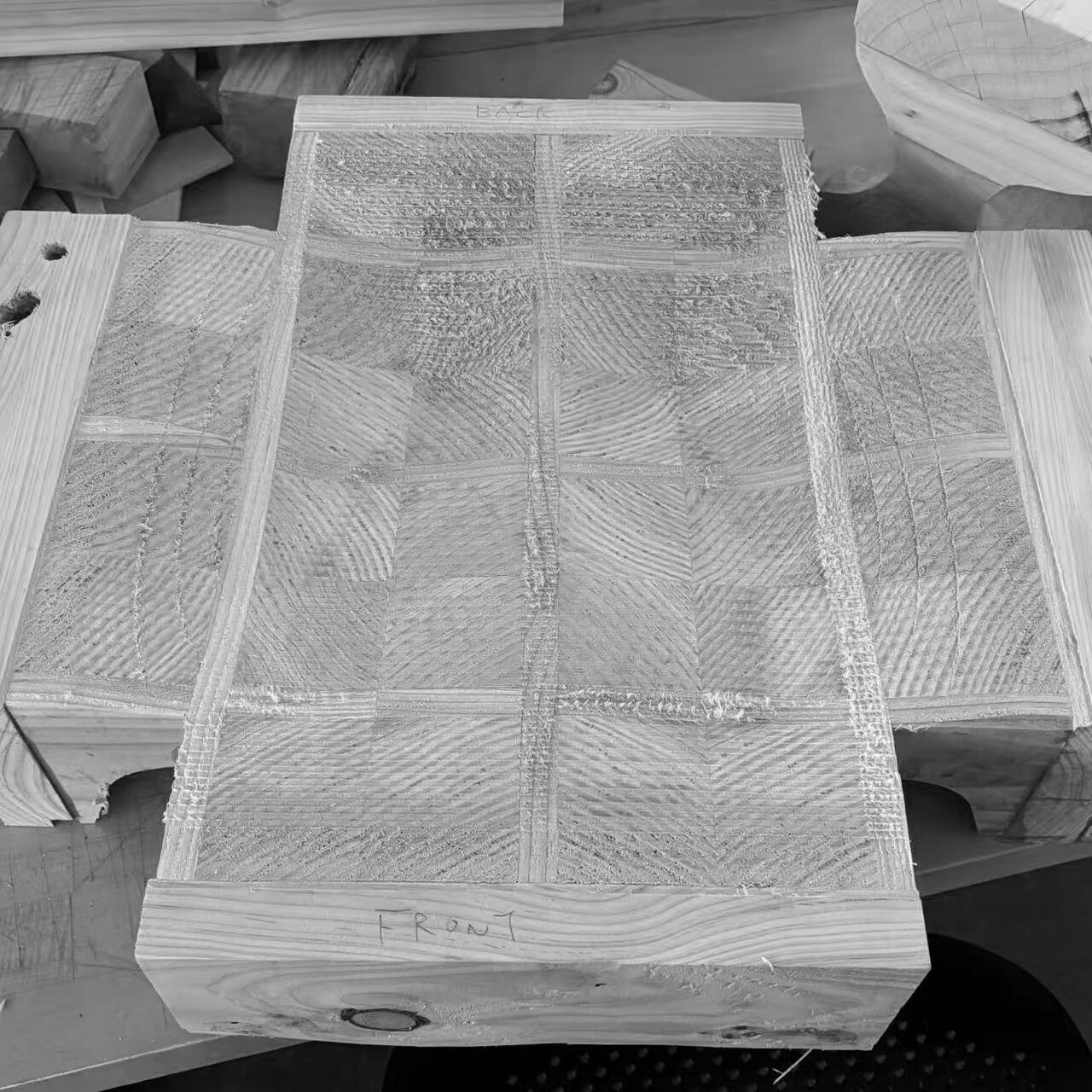
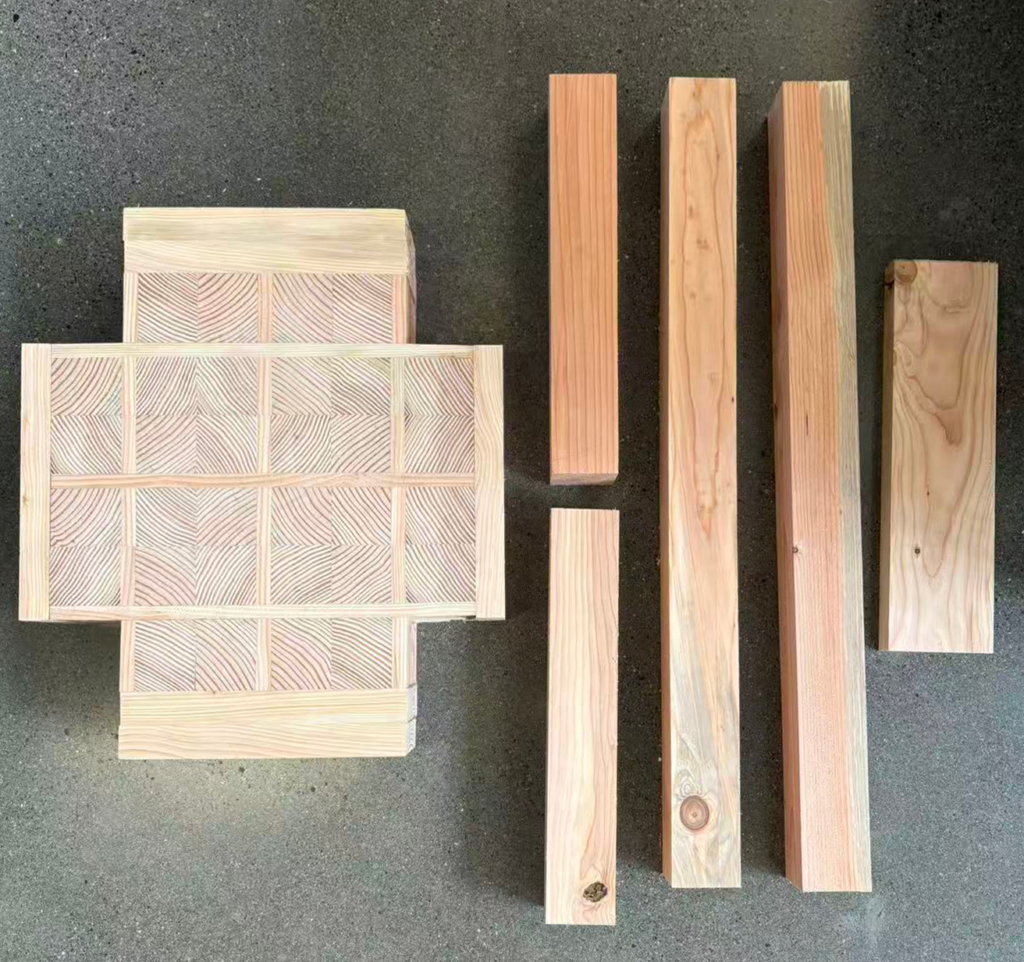
This project is the second assignment in the Master of Advanced Architectural Design program at UC Berkeley. Students were asked to design and fabricate a chair using raw dimensional lumber (1″×2″, 2″×2″, 2″×4″, 4″×4″, and 2″×6″) as the primary material. The freshly cut Douglas fir lumber retained a high moisture content, which led to visible cracking in the chair seat during the drying process. However, due to the chair’s structurally driven design, these cracks did not compromise its structural safety, and the chair is able to stably support the weight of a heavy adult.
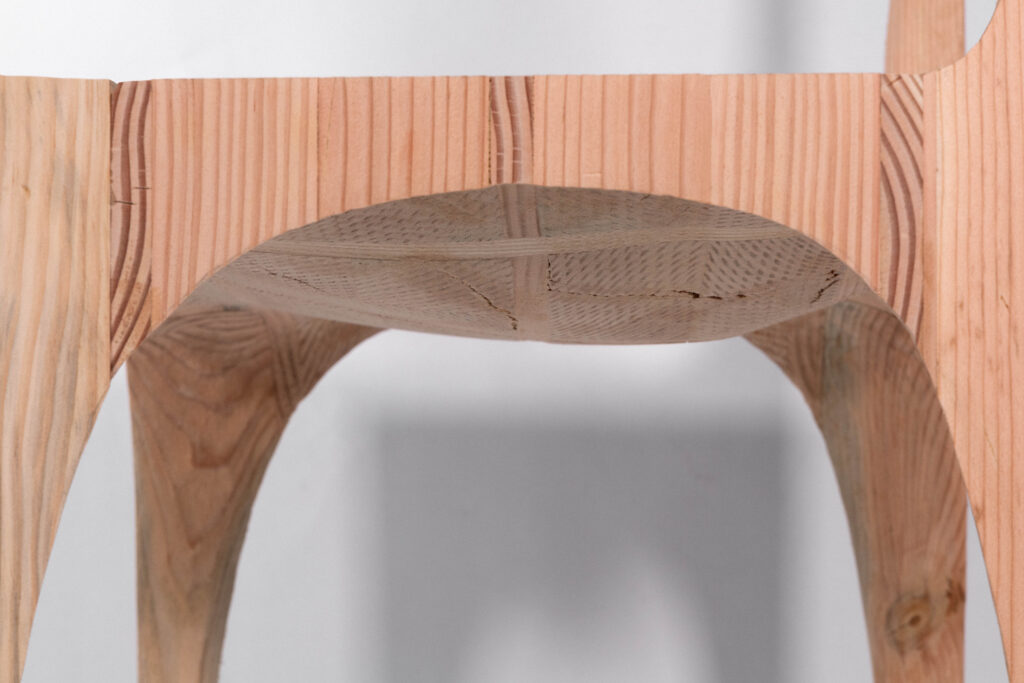
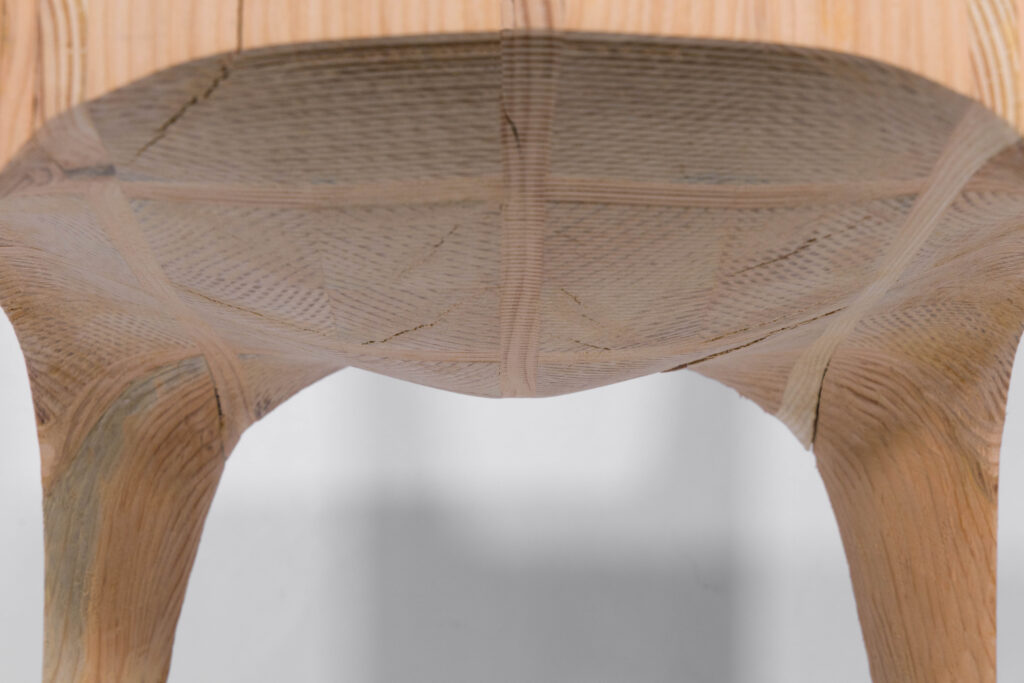
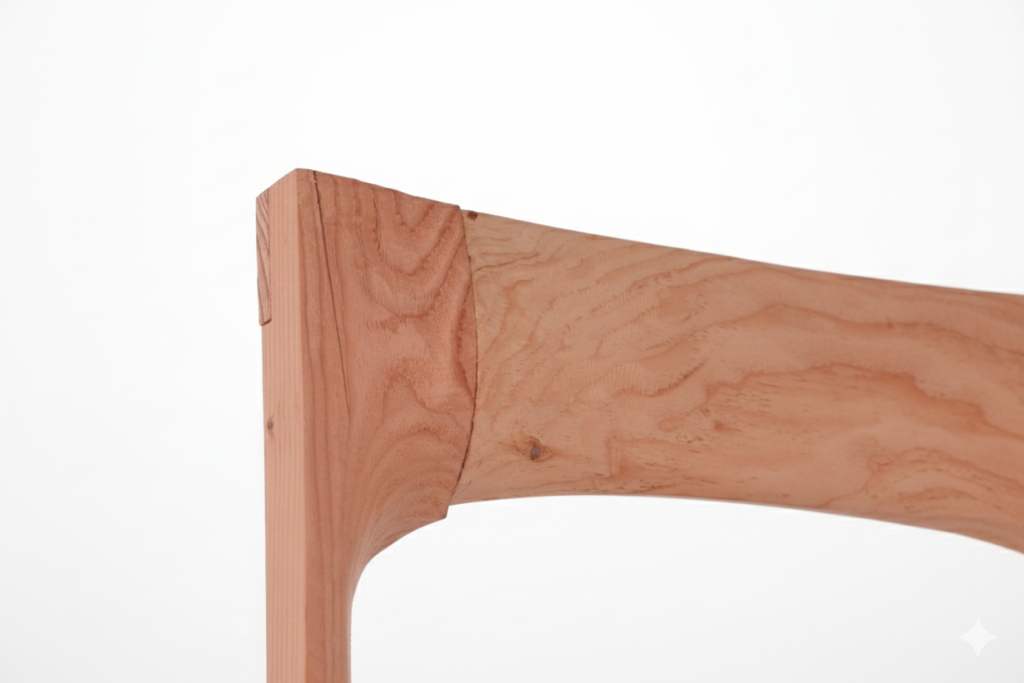
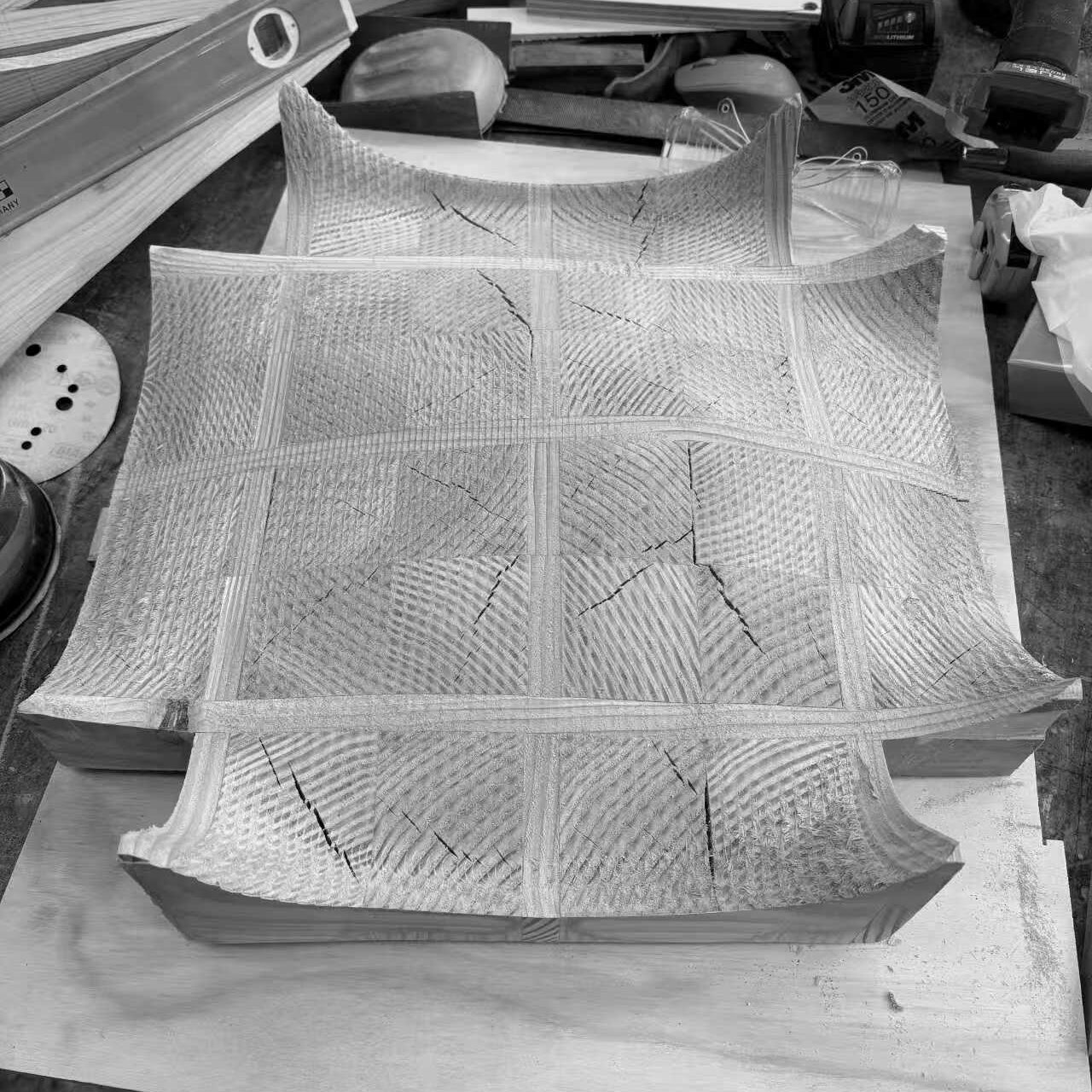
The design started with a curved seat for comfort, but the sunken center created structural challenges. A flat underside would place material where it’s less needed. To use the material efficiently, the seat’s thickness was optimized for strength and lightness. Legs and backrest were then added with a goal of achieving a unified form with curved inner surfaces and clean, flat outer surfaces that define the frame.
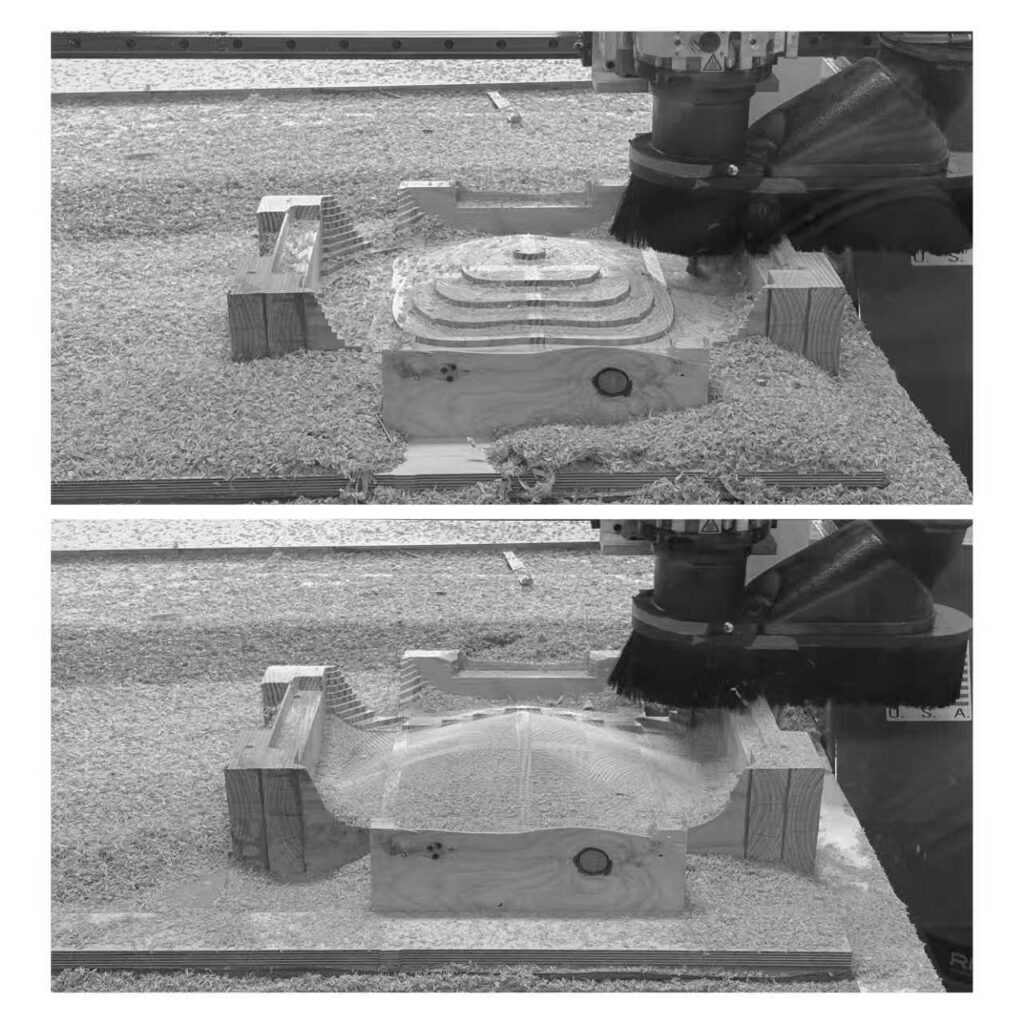
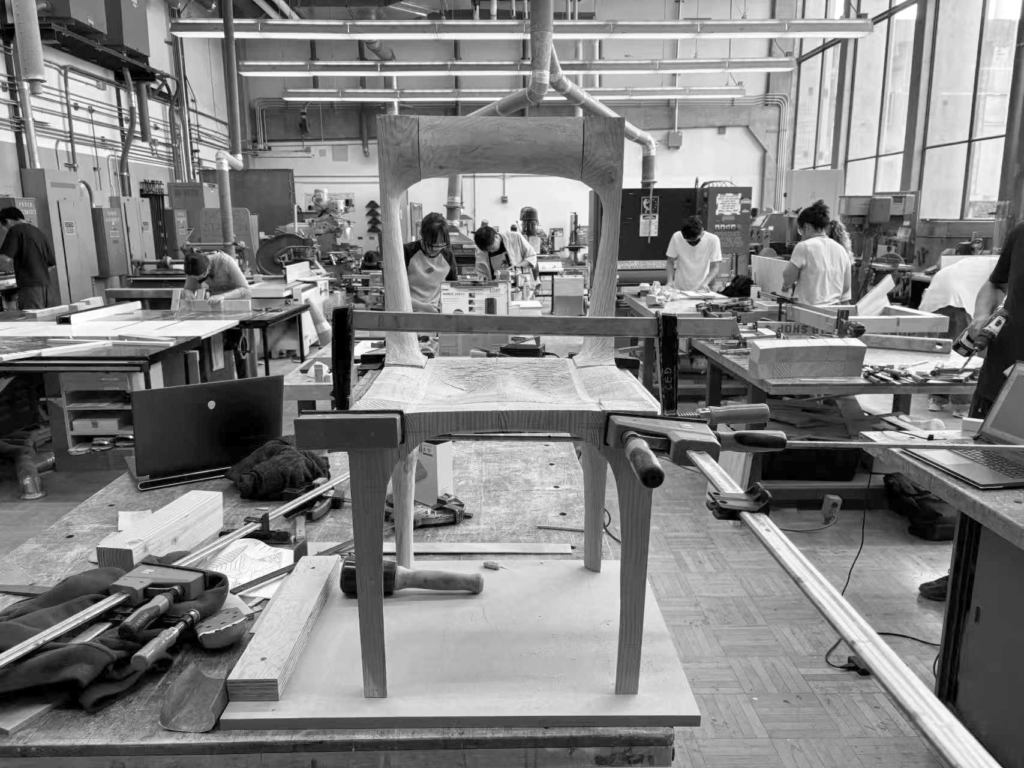
The fabrication of the chair involved carving dimensional lumber into the designed form. The gluing process was carefully planned to balance structural strength and ease of operation. The curved surfaces were shaped by the CNC router and the angle grinder. During assembly, the legs were adjusted to accommodate deviations, ensuring a precise fit with the seat.